
Reading Skills in the IB PYP with Daily Quotes Provocations
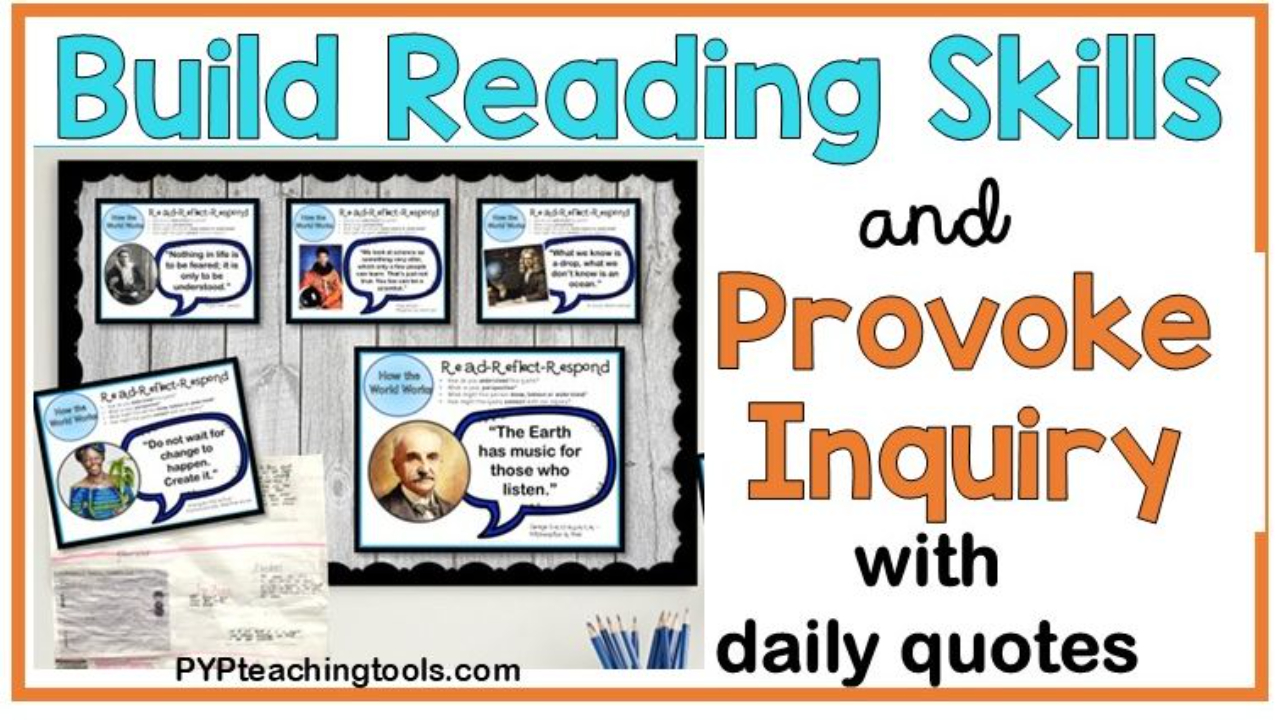
In our IB PYP classroom, literacy should do more than teach children to read words, it should help them read the world. One of the most powerful shifts I made in my classroom was introducing daily quote provocations that connected directly to our Programme of Inquiry. Daily quote provocations transformed our literacy from a subject into a thinking practice. These short but powerful texts became a bridge between reading skills, thinking skills, and concept-based learning across all six IB PYP transdisciplinary themes.
Using carefully selected quotes from artists, scientists, leaders, writers, historical figures, and even fictional characters, students engaged in a daily routine of Read – Reflect – Respond. What began as a warm-up quickly became one of the most meaningful literacy practices in our classroom.
Why Quotes Are Powerful for Reading Development
Short texts like quotes are deceptively rich. Because they are brief, students can focus their cognitive energy on deep thinking rather than decoding long passages.
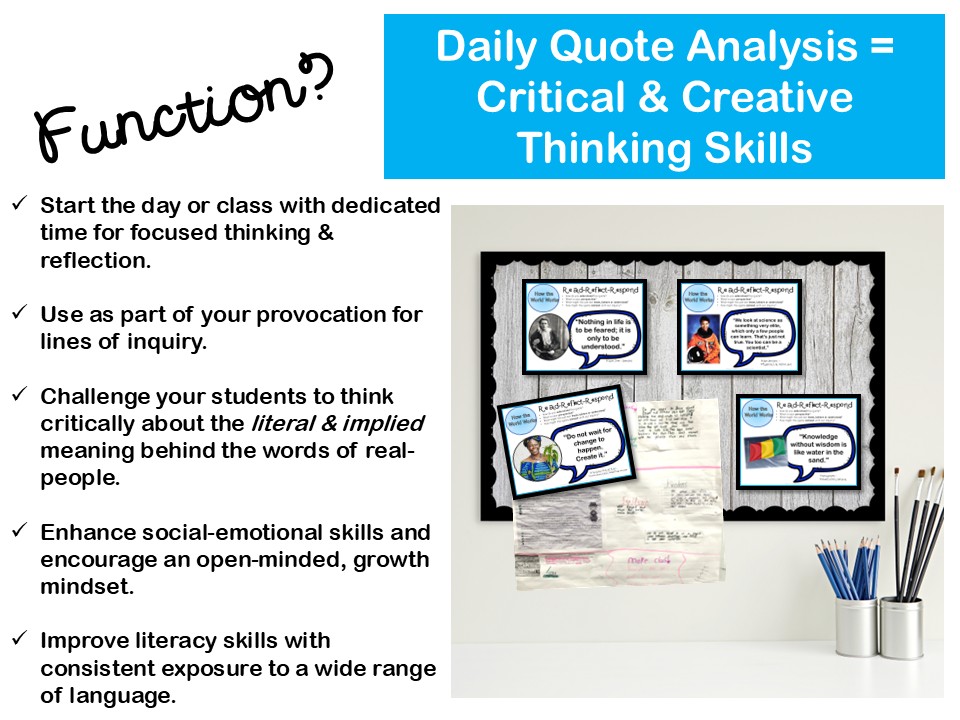
Each quote became an opportunity to practise essential reading comprehension skills:
- Inferring meaning
- Identifying author’s purpose
- Interpreting figurative language
- Making text-to-self, text-to-world, and text-to-text connections
Students learned that reading is not just about getting the “right answer.” It’s about constructing meaning, questioning ideas, and forming interpretations — exactly what the IB PYP encourages.
Building IB PYP Thinking Skills Through Daily Provocations
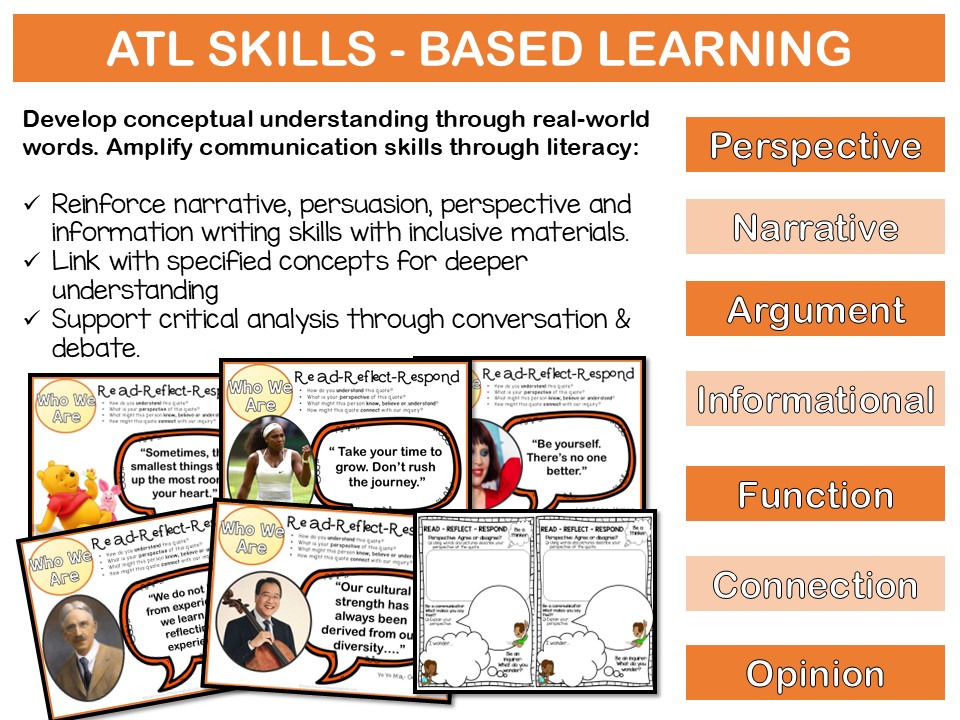
These quote explorations naturally strengthened our IB Approaches to Learning (ATL) thinking skills and I was able to tie them into every genre of writing...makes planning so much easier.😊
Critical Thinking
Students analysed perspective, bias, and intent. They learned to ask:
- Why might this person believe this?
- Is this always true? When might it not be?
Creative Thinking
Quotes often pushed students to imagine possibilities:
- What could this idea look like in action?
- How might someone else see this differently?
Metacognition
Perhaps most importantly, students reflected on how their thinking changed:
- Did my opinion shift after discussion?
- What helped me understand this more deeply?
This visible thinking made learning intentional and reflective — a cornerstone of the PYP.😊
Connecting Literacy to the Transdisciplinary Themes
Each quote was intentionally linked to one of the six transdisciplinary themes:
- Who We Are – identity, beliefs, values
- Where We Are in Place and Time – history, journeys, discoveries
- How We Express Ourselves – creativity, communication, perspectives
- How the World Works – scientific thinking, systems, innovation
- How We Organize Ourselves – leadership, fairness, responsibility
- Sharing the Planet – interdependence, sustainability, equity
Because the ideas were conceptual rather than topic-specific, students could transfer their thinking directly into our Units of Inquiry.
Three Practical Ways We Used Quotes in the Classroom
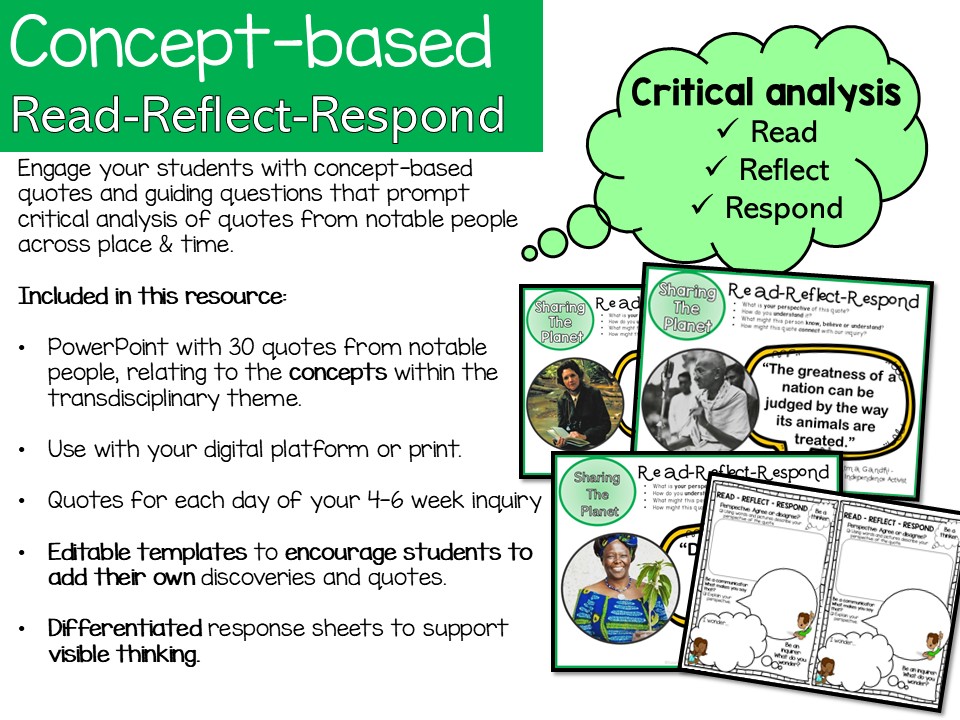
1️⃣ A Conceptual Warm-Up
We began the day with a quote connected to our current unit’s central idea or additional concepts. Before any formal teaching, students wrote or discussed:
- What do you think this means?
- Which concept does this connect to?
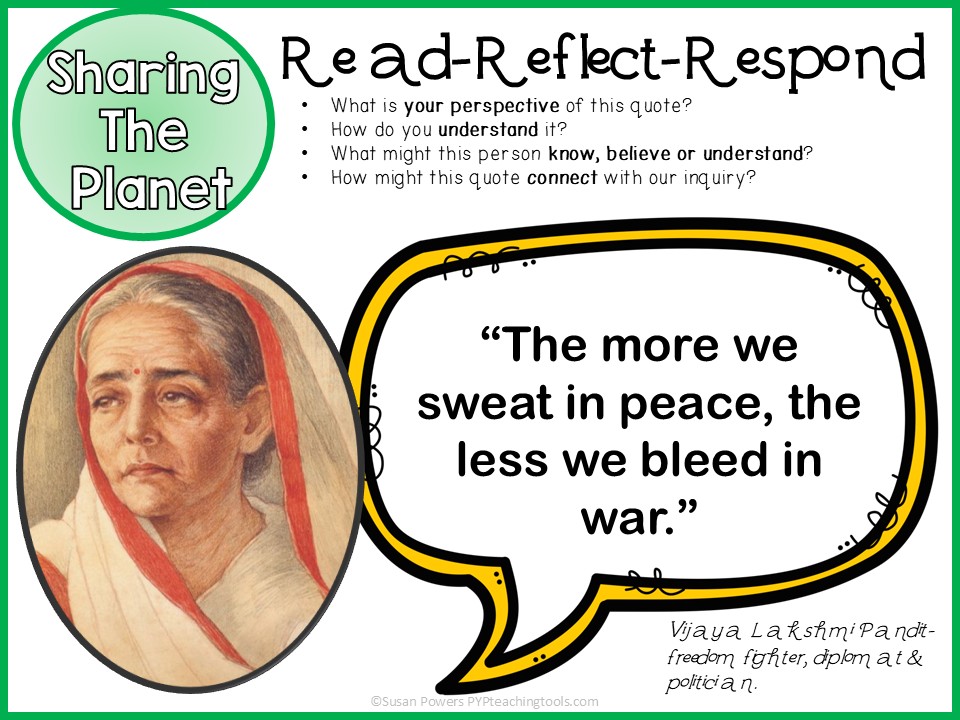
For a unit under Sharing the Planet, a quote about interdependence sparked a discussion about responsibility and systems before we ever opened a textbook. Students entered lessons already thinking conceptually.
2️⃣ Provocations for Lines of Inquiry
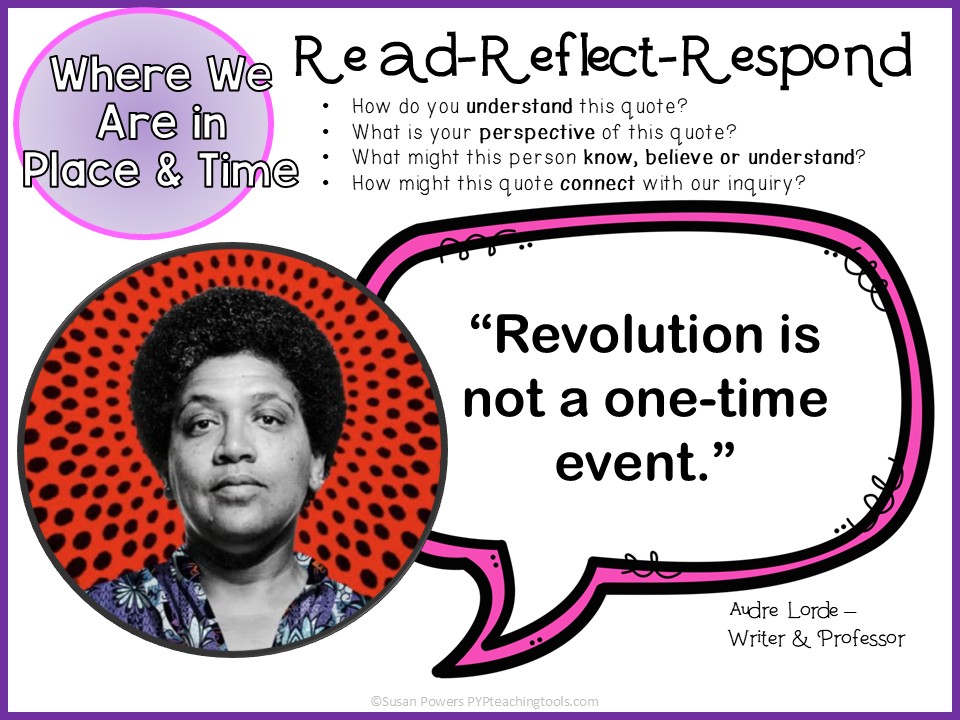
Instead of the teacher presenting lines of inquiry, we used quotes as provocations. Students generated questions such as:
- Why do people see fairness differently?
- How does where we live affect how we think?
We grouped their questions into concepts, which helped shape or refine our lines of inquiry. This gave students real ownership and positioned curiosity at the centre of learning.
3️⃣ A Catalyst for Co-Planning Assessment
One of the most powerful uses was during assessment planning. After analysing a quote connected to our unit, we asked:
“What kind of task would show deep understanding of this idea?”
Students suggested debates, visual representations, persuasive writing, and reflective journals. The quote helped them see assessment as a way to demonstrate thinking, not just recall knowledge. Engagement increased because the assessment felt meaningful and connected to their ideas.
Encouraging Student Inquiry Through Questions
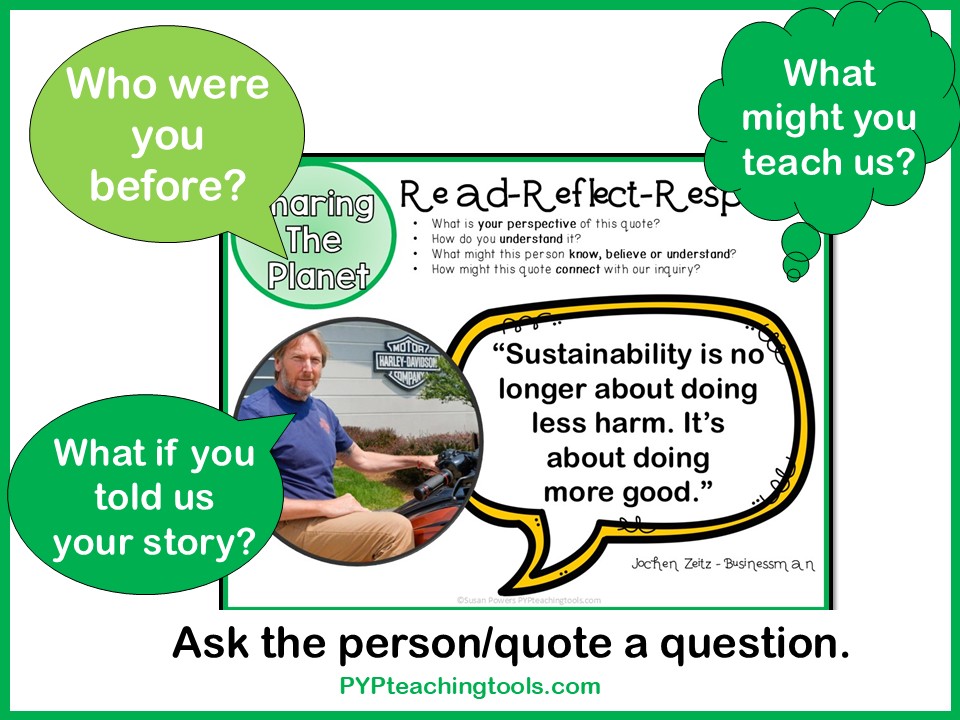
A favourite routine was to “interview the quote.” Students asked:
- Who are you?
- What experiences led you to believe this?
- What might someone disagree with you about?
This humanised authors, built empathy, and deepened comprehension. Students began to see texts as expressions of perspective rather than static statements of fact.
The Impact on Engagement and Confidence
The consistency of this routine mattered. Because the structure stayed the same, students felt safe taking intellectual risks. Reluctant readers contributed ideas. Strong readers stretched their interpretations. Discussions became richer, and written responses grew more thoughtful over time.
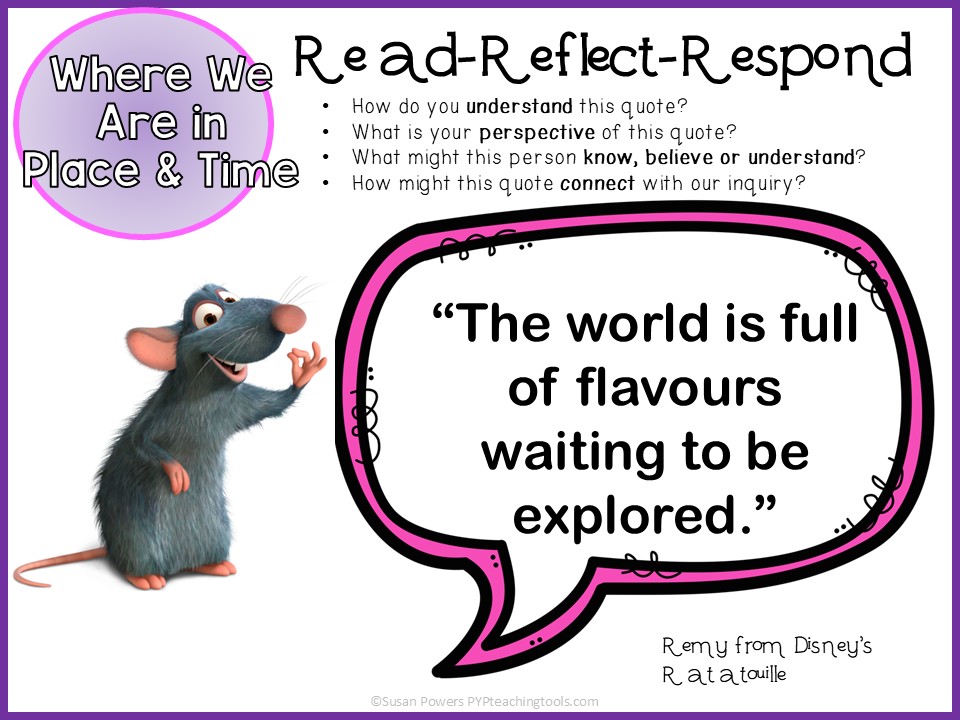
Most importantly, students started bringing in their own quotes from books, songs, and films; proof that they were transferring literacy skills beyond the classroom.😊
Final Thoughts
Daily quote provocations transformed our literacy from a subject into a thinking practice. By integrating reading skills with IB PYP thinking skills and conceptual inquiry, students learned to question ideas, reflect on perspectives, and connect learning across themes.
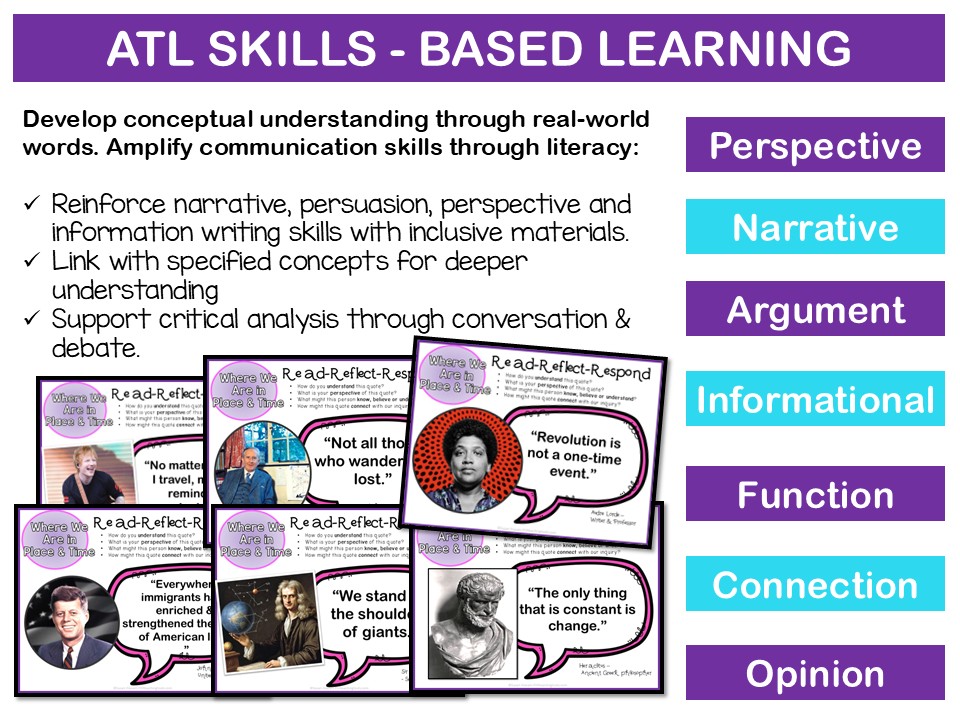 If you want a simple routine that strengthens comprehension, builds metacognition, and sparks authentic inquiry, adding daily conceptual quotes to your classroom may be one of the most powerful shifts you can make.😊
Enjoy!

P.S. YOU can read more about the art of the provocation in this article. And if youre looking for help with concept based inquiry, the Concept Seekers workshop is included inside the annual membership—practical strategies from generalisation to concepts-in-use, with classroom strategies for every age level and the learning experiences to go with them.
BE INSPIRED. BE CONFIDENT. BE READY!
A great provocation is only the beginning. What turns curiosity into real metacognitive thinking is the follow-through. The membership is full of engaging, ready-to-go learning experiences that work through the ATL skills your students need to become genuine thinkers and inquirers, long after the daily quote is off the board.
